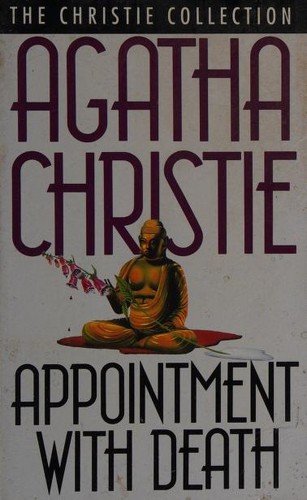
Appointment with Death by Agatha Christie, a classic detective mystery, is absolutely worth listening to for fans of tightly wound family dramas wrapped inside a Poirot investigation.
Quick verdict
This is Agatha Christie at her most psychologically sharp, trading a country house for the sun-baked ruins of Petra and swapping a simple whodunit for a study in domestic tyranny. Appointment with Death earns its reputation as one of the more emotionally charged Poirot novels because the victim’s cruelty is almost as memorable as her murder.
- Every suspect in Appointment with Death has a real motive, not just opportunity.
- Poirot solves the case in a self-imposed 24-hour deadline, which keeps the pace brisk.
- The book explores family abuse and control as seriously as it does the murder itself.
What it’s about
Appointment with Death follows Hercule Poirot on holiday in the Middle East, where a trip to the ancient city of Petra turns deadly after the domineering Mrs Boynton is found dead. Mrs Boynton has spent years keeping her adult stepchildren under her psychological thumb, controlling their every movement and crushing any attempt at independence, so when she dies, relief spreads through the family almost as fast as suspicion does. Agatha Christie gives Poirot a tight window to question the family and untangle who finally snapped, and the investigation becomes less about physical clues and more about reading years of suppressed resentment. It’s a novel about what long-term control does to people, and Christie uses the mystery structure to peel back that damage one layer at a time.
Why it works as an audiobook
Appointment with Death suits audio narration especially well because so much of the tension lives in dialogue and clipped, guarded conversation. In the classic edition, narrator Hugh Fraser brings his familiar, precise handling of Poirot’s voice, and the family’s interrogations land with more discomfort when you can hear the hesitations and evasions rather than just read them on the page. At roughly six and a half hours, it’s short enough to finish in a couple of sittings, which suits a story that builds through accumulating pressure rather than sprawling subplots. The desert setting also comes alive through narration in a way that’s easy to sink into during a commute or a long walk.
Who should read it
Appointment with Death is best suited to listeners who want their mystery with real emotional stakes rather than a purely puzzle-box plot. If you’re drawn to stories about toxic family dynamics, controlling parental figures, or the slow psychological toll of living under someone’s thumb, this one will resonate beyond the whodunit mechanics. It’s also a solid pick for Poirot fans looking for an entry with a stronger emotional core than some of his lighter cases, though newcomers to Agatha Christie can jump in without any prior series knowledge.
Similar books
Death on the Nile by Agatha Christie — another Poirot case set against a striking foreign backdrop, with a similarly tangled web of motives.
Crooked House by Agatha Christie — a standalone mystery centered on a controlling family patriarch and the secrets his relatives keep.
Rebecca by Daphne du Maurier — a psychological suspense novel steeped in control, memory, and the lingering shadow of a domineering presence.
FAQ
Is Appointment with Death a Hercule Poirot novel? Yes, it’s one of Agatha Christie’s Hercule Poirot mysteries, with the detective solving the case while on holiday in the Middle East.
How long is the Appointment with Death audiobook? The classic unabridged edition runs around six and a half hours, making it an easy one- or two-sitting listen.
Do I need to read other Poirot books first to understand Appointment with Death? No, it works perfectly as a standalone mystery; Poirot’s history isn’t essential to following the plot or the family drama at its center.
More audiobook reviews
Browse all audiobook reviews · What to watch on Prime Video · Start a 30-day Audible trial
#ad · As an Amazon Associate, Elite Books earns from qualifying purchases and sign-ups.